State Tax Service and International Monetary Fund: new cooperation stage in implementing reforms
Press service of the State Tax Service of Ukraine , published 02 December 2025 at 13:15 Chapter: International cooperation
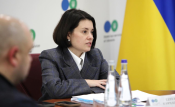
Progress in implementation of the National Revenue Strategy to improve tax collection, as well as priority areas for further cooperation were discussed by team of the State Tax Service of Ukraine, led by acting Head of the State Tax Service Lesya Karnaukh and experts from the International Monetary Fund.
Attention was focused on four key reform areas of the State Tax Service: development of the compliance risk management (CRM) system, state of the tax audit, tax debt management and assessment of opportunities to strengthen state revenues by combating shadow economy.
“Cooperation with the International Monetary Fund allows us to accelerate modernization of the tax system, make it more transparent, technologically advanced and risk-oriented. We are confidently moving forward in implementation of the National Revenue Strategy, and support of the international partners is important element of these reforms’ success” – Lesya Karnaukh emphasized.
During the discussion of report on the results of previous mission, the IMF experts noted positive dynamics in the implementation of key initiatives and outlined high level of involvement of the State Tax Service’s leadership. At the same time, they noted that certain legislative restrictions in the areas of CRM, audit and tax administration hinder a full transition to the risk-based approaches.
Transparency, integrity and anti-corruption standards
State Tax Service has formed a single authorized unit for corruption prevention and detection and defined criteria for assessing its effectiveness. The Service has also developed Anti-corruption program for 2026 – 2028 and Code of ethical conduct for employees.
These steps are part of a large-scale transformation being implemented jointly with the Ministry of Finance and international partners.
Digital transformation and change management
State Tax Service continues its active digital transformation with support of the World Bank and the EU. At the same time, internal capabilities in the areas of project management, communications and strategic planning are being strengthened.
CRM, audit and debt management: results and recommendations
The Service has expanded its risk analysis and processing tools, is implementing risk-oriented programs and is increasing its top-down analysis capabilities. Separately, the parties considered the IMF recommendations on tax debt management and combating shadow economy.
According to the meeting results, the parties identified key areas of further IMF support for the State Tax Service:
- change management;
- CRM development;
- audit modernization;
- tax debt management;
- gap analysis and shadow economy research.