State Tax Service and the International Monetary Fund will continue a set of joint tax transformation measures
Press service of the State Tax Service of Ukraine , published 20 March 2026 at 15:35 Chapter: National Revenue Strategy
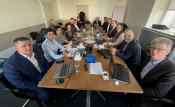
A set of measures that the State Tax Service will work on in the coming years to become even more modern, effective and European institution was discussed during strategic mission of the IMF representatives with the State Tax Service’s team. Event was attended by acting Head of the State Tax Service of Ukraine Lesya Karnaukh and international partners led by the IMF Senior Economists Andja Komso and Enrik Aav, World Bank Lead Public Administration Specialist Jan Loeprick and EU4PFM representatives.
As Lesya Karnaukh noted, tax transformation is not just about updating services or implementing individual IT solutions. It is a global change in the tax administration architecture.
According to her, the State Tax Service has already made significant progress, but with support of the international partners, it will continue a set of changes.
“What is important is that all changes are taking place in full coordination with the Government, Ministry of Finance and synchronized with the National Revenue Strategy and requirements of the European integration” – emphasized acting Head of the State Tax Service.
Focus of attention was on the following key aspects:
- service approach.
State Tax Service has already begun to change relationship philosophy between the tax authority and the taxpayer.
“State Tax Service will continue to create service that will be focused on the taxpayer, not on the processes. Maximum digitalization of processes, minimum human intervention and paperwork. This is what will make work of the State Tax Service transparent, open and increase trust” – Lesya Karnaukh outlined;
- analytics development.
With assistance of the international partners, the State Tax Service will focus on developing analytical tools. This includes data storage, risk and compliance analytics, tools that will allow each department to work with data independently, without involving the IT, etc.
This is the basis for transformation of the State Tax Service;
- compliance and risk management.
It is about changing approaches to audits. Focus on quality, not quantity, concentration only on cases where there is a high level of risk. This year, the State Tax Service has already implemented a risk-oriented approach compiling plan-schedule of audits.
Interdepartmental coordination is being strengthened to combat shadow economy.
“In addition, our goal is for all processes and decisions in the State Tax Service to be based on data. We have already started integrating the CRM into key processes, and we plan to complete full integration by the end of 2030. What does this give in practice? New administration quality” – Lesya Karnaukh emphasized.
- Separate direction is integration with the European systems.
Work continues on bringing the tax system into line with the EU standards. This includes data, processes and rules. This also involves deepening the interdepartmental cooperation.
Representatives of the State Tax Service, particularly, got acquainted with the Austrian model of tax system management, predictive analytics and institutional reforms.
As acting Head of the State Tax Service noted, the next cooperation stage with the international partners is a deep analysis of the current state, clear definition of existing gaps and formation of the detailed roadmap for changes. So that these are not point solutions, but a comprehensive and consistent transformation.
“We understand all the challenges the tax authorities will be facing. They are caused by both internal processes and external factors, primarily russian aggression. But the strategic goal remains unchanged: the tax system must be transparent and predictable, ensure financial stability and meet the European standards” – Lesya Karnaukh underscored.